
Ask anyone who wears Chikankari regularly and they’ll tell you: the fabric decides more than the design does. The same hand embroidery feels crisp and everyday on cotton, floaty and festive on georgette, and featherlight on kota. Pick the fabric first and the rest of the decision almost makes itself.
This guide walks through every fabric in our collection — what it feels like, when it works best, and what it asks of you in care — with real pieces from the shop so you can see each one rather than imagine it.
The 30-second answer
- Everyday comfort, hot weather: pure cotton or cambric
- The lightest thing you’ll ever wear: kota
- Festive drape and movement: georgette (heavy georgette for occasion sets)
- Dupattas that hold their shape: cotton-silk or linen-silk
- Georgette look at a gentler price: faux georgette
Now the detail — because the differences are worth two minutes.
Pure cotton — the everyday classic
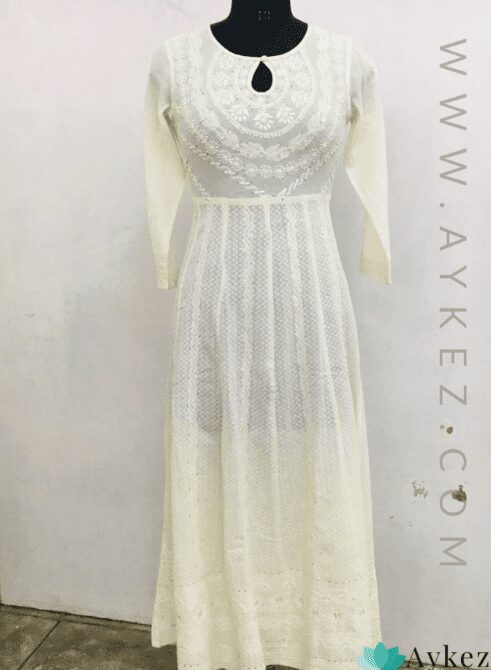
Cotton is the fabric Chikankari’s story is usually told on, and it’s still where most of the craft is stitched today. It breathes, it softens with every wash, and it takes hand embroidery beautifully because the needle has structure to work against. A cotton Chikankari kurta is the piece you reach for on an ordinary Tuesday — and that’s its superpower.
Choose it when: you want daily wear, hot-weather comfort, or your first Chikankari piece.
Know before buying: cotton creases honestly. A quick iron on the reverse keeps the embroidery raised.
Cambric — cotton’s smoother cousin
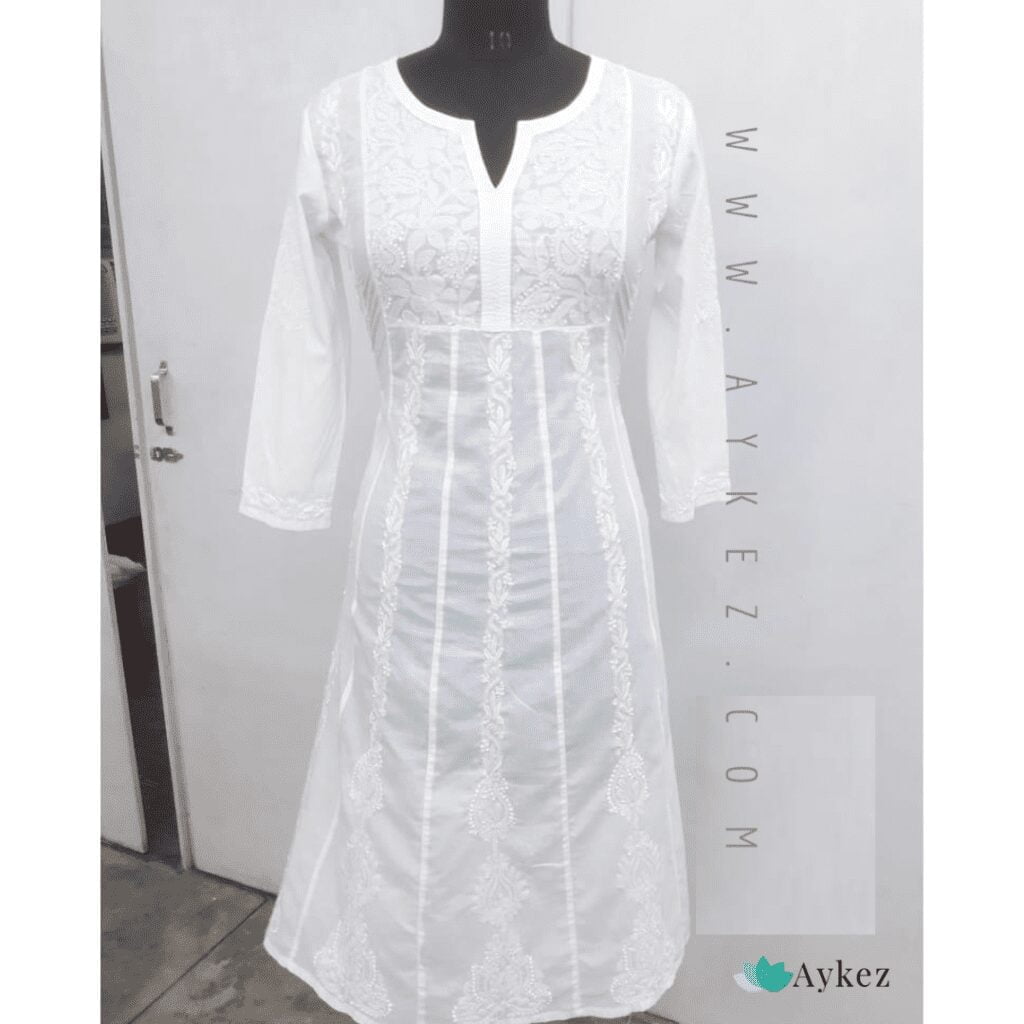
Cambric is a fine, closely woven cotton with a smooth, slightly lustrous finish. It drapes a touch more elegantly than regular cotton and feels gentler against skin, which is why several of our kurtis and top-kurtas use it. If plain cotton is a crisp white shirt, cambric is the same shirt after the best laundry day of its life.
Choose it when: you want everyday cotton comfort with a more polished surface.
Know before buying: treat it like fine cotton — gentle wash, no wringing.
Kota — the featherweight
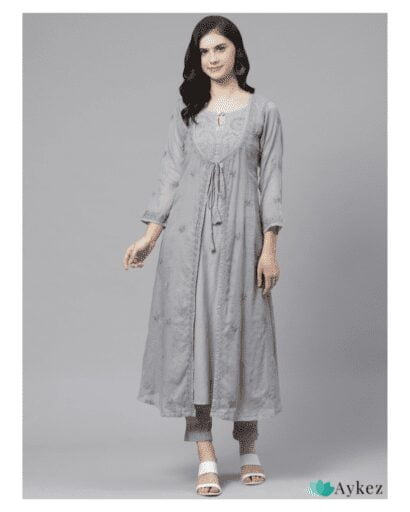
Kota is one of India’s lightest traditional weaves — an open, graph-paper-like texture you can recognise from across a room. Air moves through it freely, which makes kota Chikankari the definitive answer to real heat. The open weave also gives the embroidery a delicate, floating quality.
Choose it when: summers are serious, or you want a set that weighs almost nothing in a suitcase.
Know before buying: the open weave is semi-sheer by nature — our kota sets pair the kurta with a trouser, and some include a slip. Check each product page.
Georgette — the festive drape
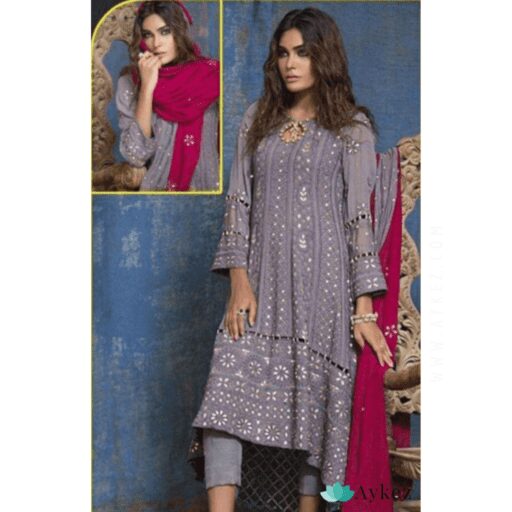
Georgette is a fine, springy fabric with a signature flow — it moves half a second after you do, which is exactly what you want from occasion wear. Chikankari on georgette reads dressier than the same work on cotton, and our heavy-georgette suit sets add body to that flow for weddings and festive evenings. Mirror-work pieces in the collection are built on this base.
Choose it when: the calendar says festive — Eid gatherings, weddings, receptions, evenings out.
Know before buying: georgette is semi-sheer and usually worn with lining; it prefers a delicate hand wash and drip-drying.
Faux georgette — the honest imitation
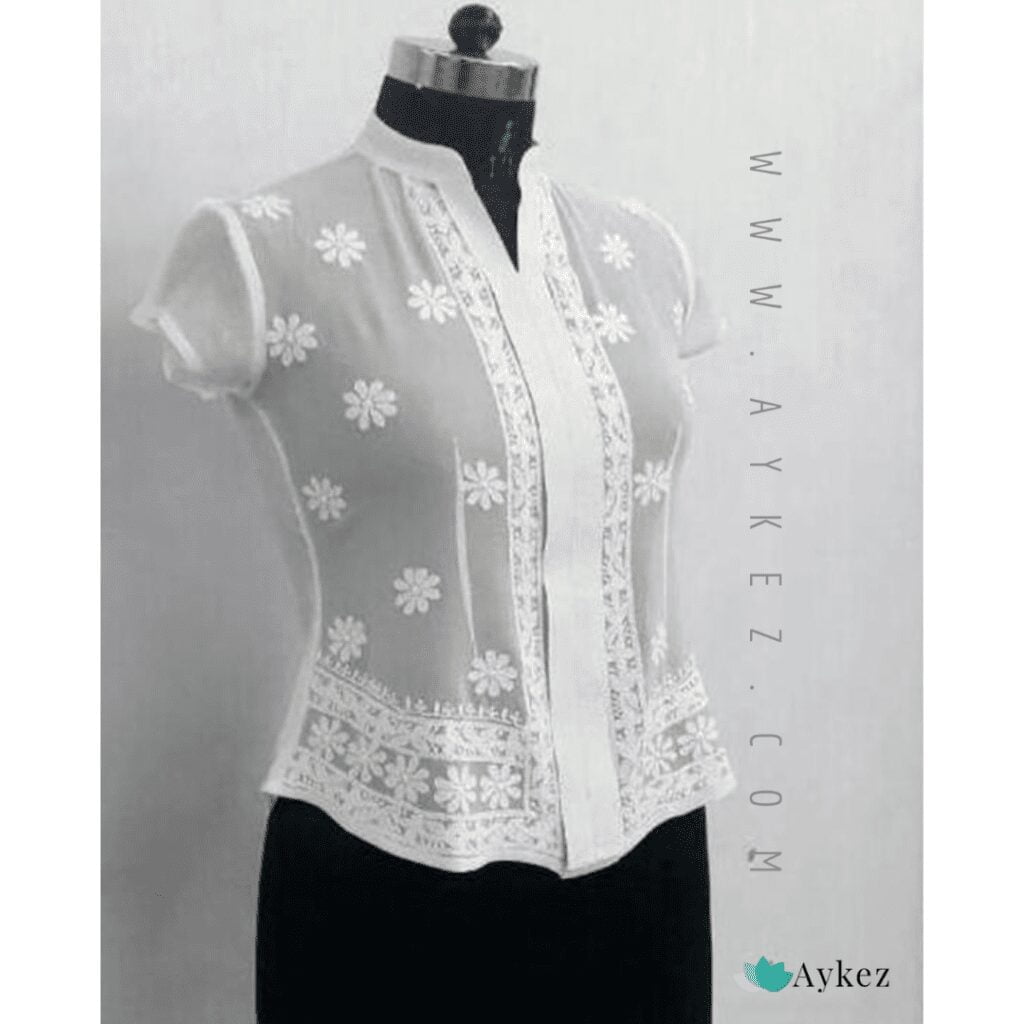
“Faux” simply means the georgette texture achieved with synthetic yarns rather than the silk of traditional georgette. It keeps the float and the sheer-sleeved lightness at a friendlier price, and it asks for less careful handling than traditional silk georgette does. We label it exactly what it is — because knowing your fabric is the whole point of this guide.
Choose it when: you want the georgette look for lighter occasions with easier care.
Know before buying: synthetics hold warmth more than cotton — better for evenings than midday sun.
Cotton-silk and linen-silk — the dupatta weaves
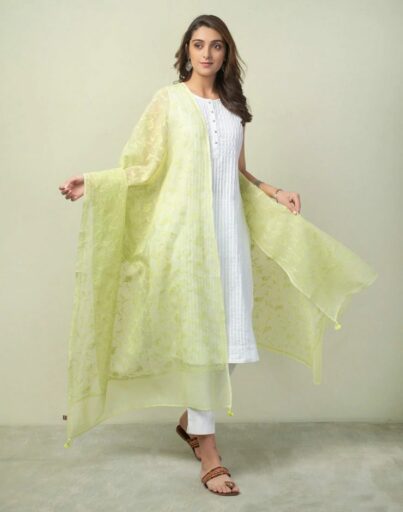
Blend weaves earn their keep in dupattas. Cotton-silk carries a gentle sheen that lifts embroidery into something special; linen-silk adds body, so the drape holds its arrangement instead of collapsing. If your outfit needs one piece to do the talking, a blend-weave Chikankari dupatta is the most efficient upgrade in the wardrobe.
Choose it when: you’re building outfits around a statement drape, or gifting.
Know before buying: iron on the reverse, and store folded with the embroidery inward.
Side by side
| Fabric | Feel | Breathability | Sheerness | Best for | Care effort |
|---|---|---|---|---|---|
| Pure cotton | Crisp, softens with wear | Excellent | Low | Daily wear | Easy |
| Cambric | Smooth, fine | Excellent | Low | Polished everyday | Easy |
| Kota | Airy, textured | Outstanding | Semi-sheer | Serious heat | Gentle |
| Georgette | Fluid, springy | Moderate | Semi-sheer | Festive wear | Delicate |
| Faux georgette | Fluid, light | Moderate | Semi-sheer | Light occasions | Easy-moderate |
| Cotton-silk / linen-silk | Sheen / body | Good | Varies | Dupattas | Gentle |
Match the fabric to your climate
India, UAE and hot-summer US states: kota and pure cotton earn their place — they’re the fabrics this craft evolved alongside, in a city of long hot summers. The UK and cooler seasons: georgette and cambric layer well, and a cotton kurta over jeans with a cardigan is a genuinely good autumn outfit. Air-conditioned everywhere: anything goes — pick by occasion instead.
Three questions we hear constantly
Which fabric is “real” Chikankari? All of them. Chikankari is the embroidery, not the base cloth — the craft historically began on fine muslin cotton and now lives on everything from kota to georgette. What matters is that the embroidery is done by hand; our guide to what Chikankari actually is covers how to tell.
Which fabric is most beginner-friendly? Pure cotton or cambric — easy care, no lining questions, and the embroidery shows beautifully. Start there, add georgette when an occasion demands it.
Do different fabrics wash differently? Yes — the embroidery always wants gentleness, but georgettes and blends want it most. The full routine, fabric by fabric, is in our care guide.
Where to start
Browse by what you now know you want: everyday cotton and cambric kurtas, festive georgette suit sets, statement blend-weave dupattas — or unstitched fabric if you’d rather your tailor decide the silhouette. And if sizing is the next question, the size guide answers it in five minutes.
About the author :
Related posts
Popular products
-
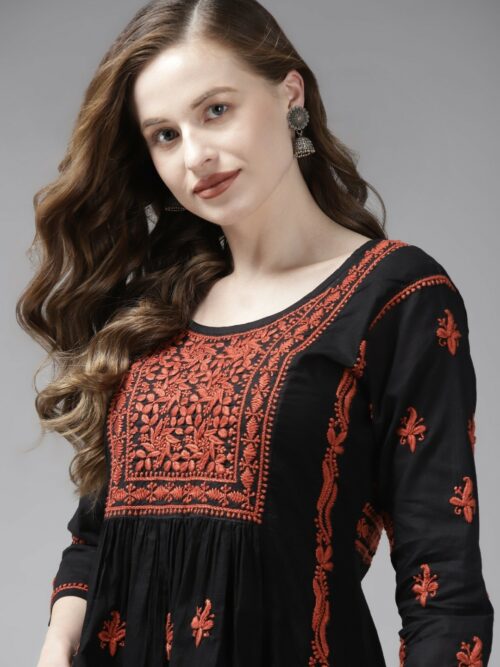 Hand Embroidered New Cotton Lucknowi Chikankari Kurti KKCK31
4,000 ₹
Hand Embroidered New Cotton Lucknowi Chikankari Kurti KKCK31
4,000 ₹ -
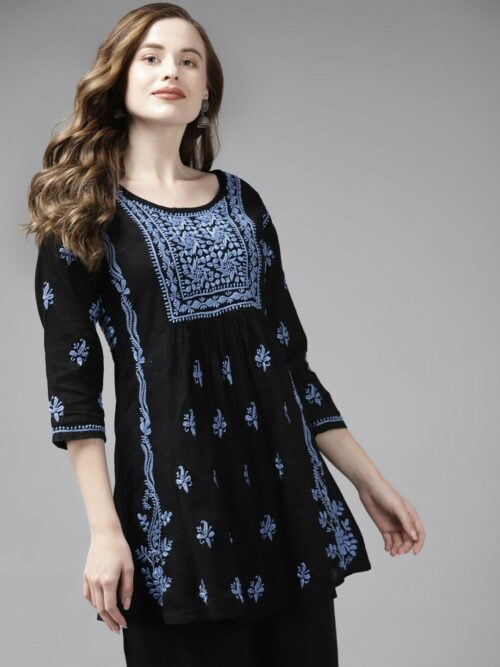 Hand Embroidered Black New Cotton Lucknow Chikankari Kurti KKCK30
4,000 ₹
Hand Embroidered Black New Cotton Lucknow Chikankari Kurti KKCK30
4,000 ₹ -
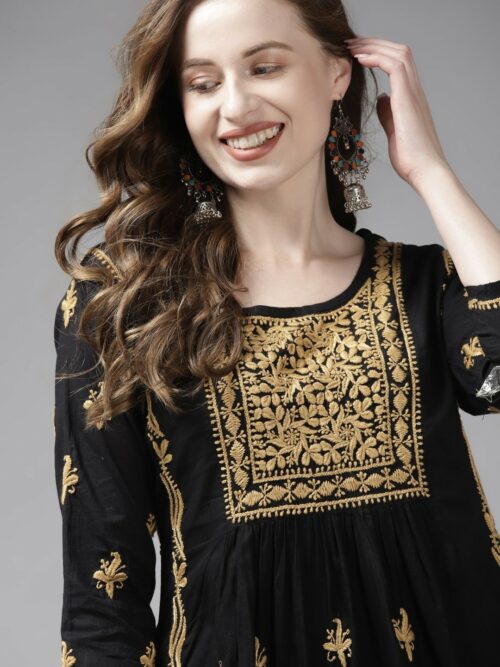 Hand Embroidered Black New Cotton Lucknowi Chikankari Kurti KKCK29
4,000 ₹
Hand Embroidered Black New Cotton Lucknowi Chikankari Kurti KKCK29
4,000 ₹ -
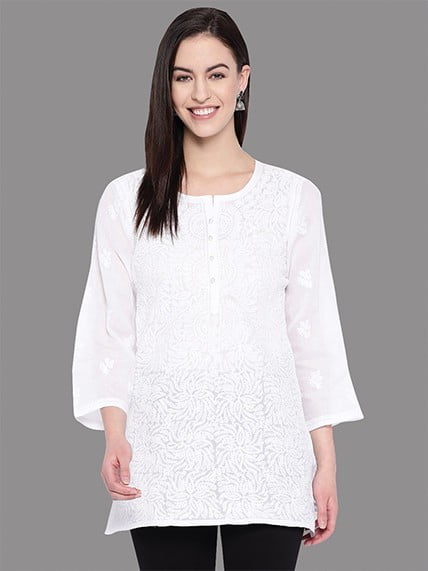 Aykez Hand Embroidered New White Cotton Lucknowi Chikankari Kurti KKCKBS02
4,000 ₹
Aykez Hand Embroidered New White Cotton Lucknowi Chikankari Kurti KKCKBS02
4,000 ₹
