
Chikankari — the delicate shadow-work embroidery of Lucknow — has quietly become one of the most searched-for Indian crafts in the UK. But most of what is sold online as “chikankari” is machine-embroidered imitation. This guide shows you how to tell the difference before you buy.
Hand embroidery vs machine imitation: 4 checks
- Look at the back. Hand Chikankari shows small knots and thread tails on the reverse; machine work looks identical on both sides.
- Look for tiny variations. No two hand-embroidered motifs are perfectly identical. Perfect repetition = machine.
- Check the stitch names. Genuine sellers can tell you which stitches were used — bakhiya (shadow work), phanda (knots), jaali (net effect), murri. If a listing can’t name them, be careful.
- Price reality. A hand-embroidered kurta takes days of needlework. If it costs less than a takeaway, it isn’t hand-made.
Getting the size right
Indian ethnic sizing runs on bust measurement in inches. Measure your bust and compare with the size guide on every product page — as a rule, if you are between sizes, size up: Chikankari is designed for a relaxed, breathable fit. Every piece in our kurta & kurti collection has a size guide button next to the size selector.
Delivery to the UK, customs and VAT
We ship UK orders directly from Lucknow with tracked international delivery (free over the threshold shown at checkout). As an overseas retailer we do not add UK VAT at checkout, so your parcel may be subject to import VAT (and customs duty on larger orders) collected by the courier before delivery — worth factoring in. Delivery times and costs are always shown at checkout before you pay, in pounds.
Where to start
First-time buyers usually start with a white-on-white cotton kurta — the classic. If you want something for an occasion, a kurta set or anarkali arrives ready to wear. Browse the full collection here — every piece is hand-embroidered in Lucknow.
About the author :
Related posts
Popular products
-
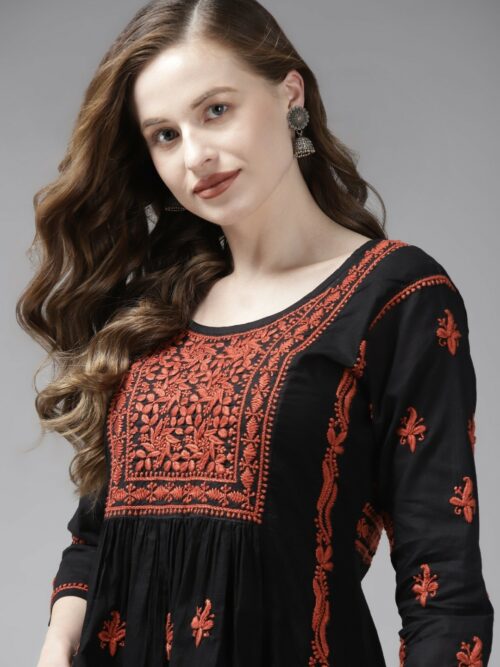 Hand Embroidered New Cotton Lucknowi Chikankari Kurti KKCK31
د.إ180.00
Hand Embroidered New Cotton Lucknowi Chikankari Kurti KKCK31
د.إ180.00 -
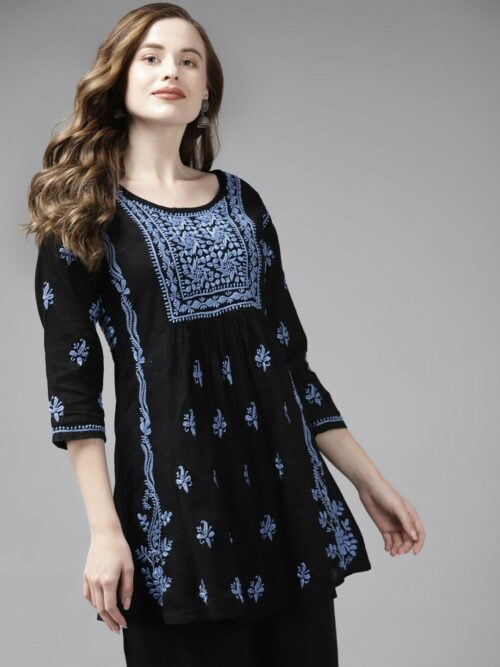 Hand Embroidered Black New Cotton Lucknow Chikankari Kurti KKCK30
د.إ180.00
Hand Embroidered Black New Cotton Lucknow Chikankari Kurti KKCK30
د.إ180.00 -
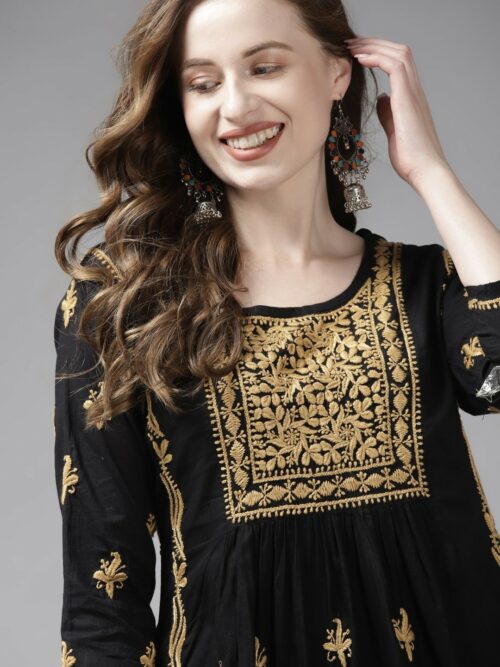 Hand Embroidered Black New Cotton Lucknowi Chikankari Kurti KKCK29
د.إ180.00
Hand Embroidered Black New Cotton Lucknowi Chikankari Kurti KKCK29
د.إ180.00 -
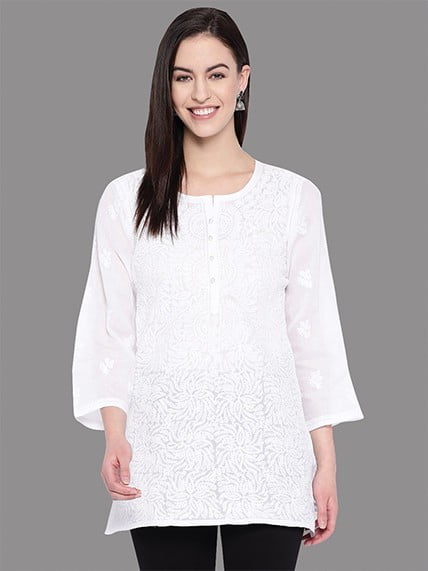 Aykez Hand Embroidered New White Cotton Lucknowi Chikankari Kurti KKCKBS02
د.إ180.00
Aykez Hand Embroidered New White Cotton Lucknowi Chikankari Kurti KKCKBS02
د.إ180.00
